Wagga Tree Services connects Wagga Wagga and the Riverina property owners with qualified, insured local arborists for prices and related tree work. Tell us what the tree is doing and we'll match it to an operator who covers your suburb — free call, no obligation.
Indicative ranges by size
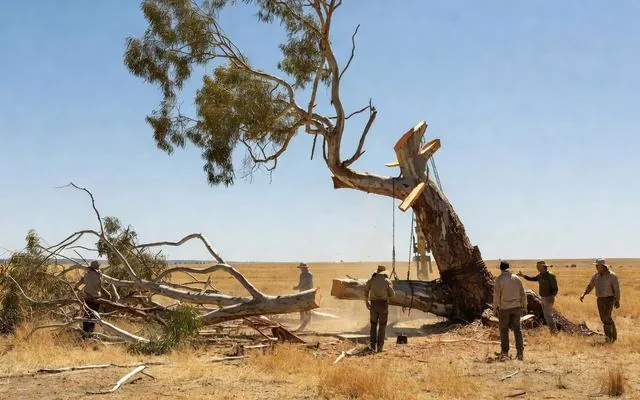
Small trees under 5 metres generally run $250 to $800. Medium trees between 5 and 10 metres — the most common suburban job — sit between $800 and $2,500. Large trees from 10 to 15 metres run $2,500 to $6,000. Very large trees above 15 metres, particularly where a crane is needed, range from $6,000 up to $15,000.
Across Australia the median tree removal sits around $1,740, which lines up with the middle of that medium band. These are indicative ranges from published price guides, not a quote.
Access matters more than height
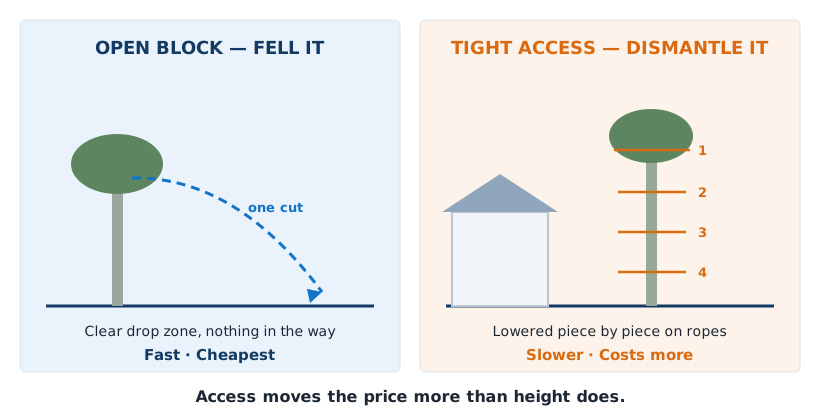
This is the thing most people get wrong. A 10-metre tree on an open block with the chipper parked alongside is a fundamentally cheaper job than an 8-metre tree behind a narrow side gate where every piece has to be carried through by hand.
If a machine can reach the tree, the job is quick. If it can't, you're paying for labour to move every kilogram of it manually — and a mature tree is a lot of kilograms.
The other cost drivers
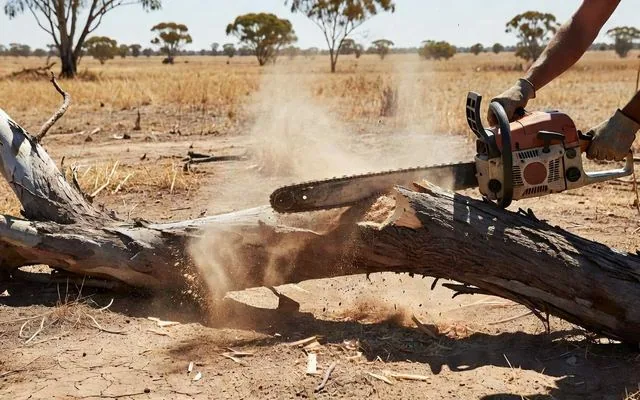
Proximity to structures determines whether the tree can be felled or has to be dismantled in sections on ropes. Powerlines add approvals, risk and sometimes the network operator's involvement. Species matters — dense hardwoods like red gum are slower work than soft-wooded species. Debris handling is a real line item: chipping on site is cheaper than carting away, and keeping the timber for firewood can reduce the price. Stump grinding is almost always extra. Emergency and after-hours work carries a premium.
Arborist reports, where council requires one, run $300 to $800.
Comparing quotes properly
Get the scope in writing, and check three things every time: is the stump included, is all debris removed, and is the operator's public liability insurance current. A cheap quote that leaves the stump and a pile of timber isn't cheap.
Be wary of a quote given over the phone without anyone seeing the tree. It'll either be padded to cover the unknown, or it'll change on the day.
Areas covered
Wagga Wagga and the surrounding Riverina.