Wagga Tree Services connects Wagga Wagga and the Riverina property owners with qualified, insured local arborists for emergency removal and related tree work. Tell us what the tree is doing and we'll match it to an operator who covers your suburb — free call, no obligation.
Do these things first
If there are powerlines involved, stay well clear and ring Essential Energy. Never approach a tree that's touching or near a line, and treat every fallen line as live.
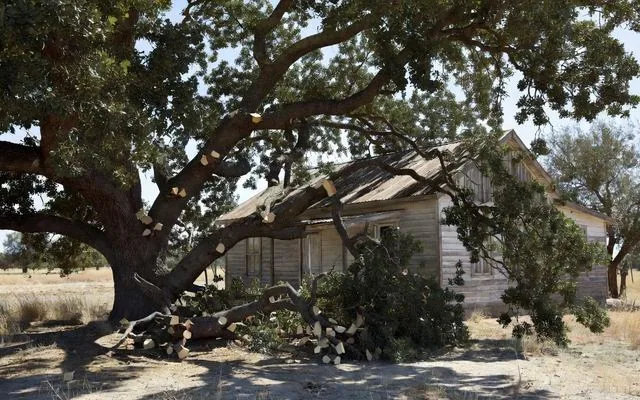
If a tree has hit the house and there's structural damage or anyone is hurt, that's triple zero. For a tree down with no immediate danger to life, NSW SES on 132 500 is the right call.
Once it's safe, photograph everything before anything is moved. Your insurer will want it, and the photos also let an arborist size the job before they arrive.
What an emergency callout involves
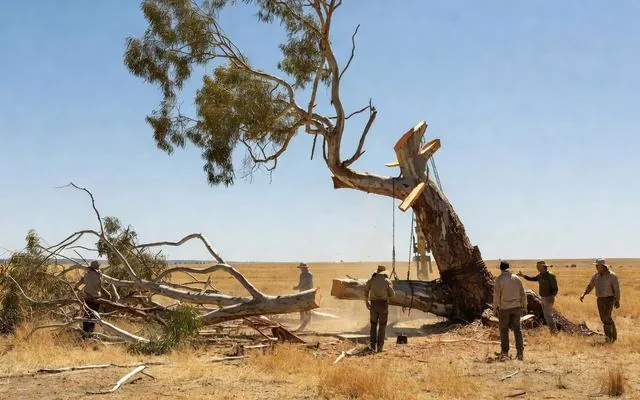
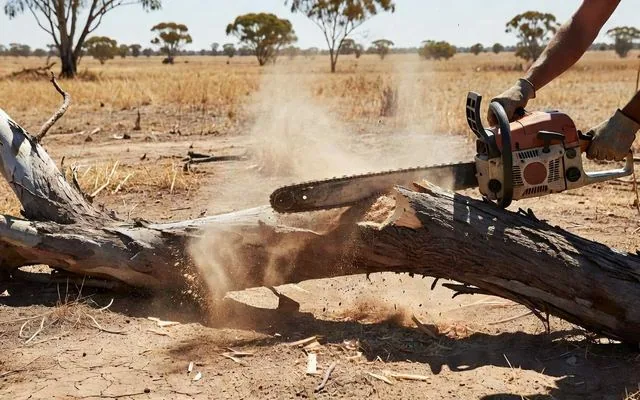
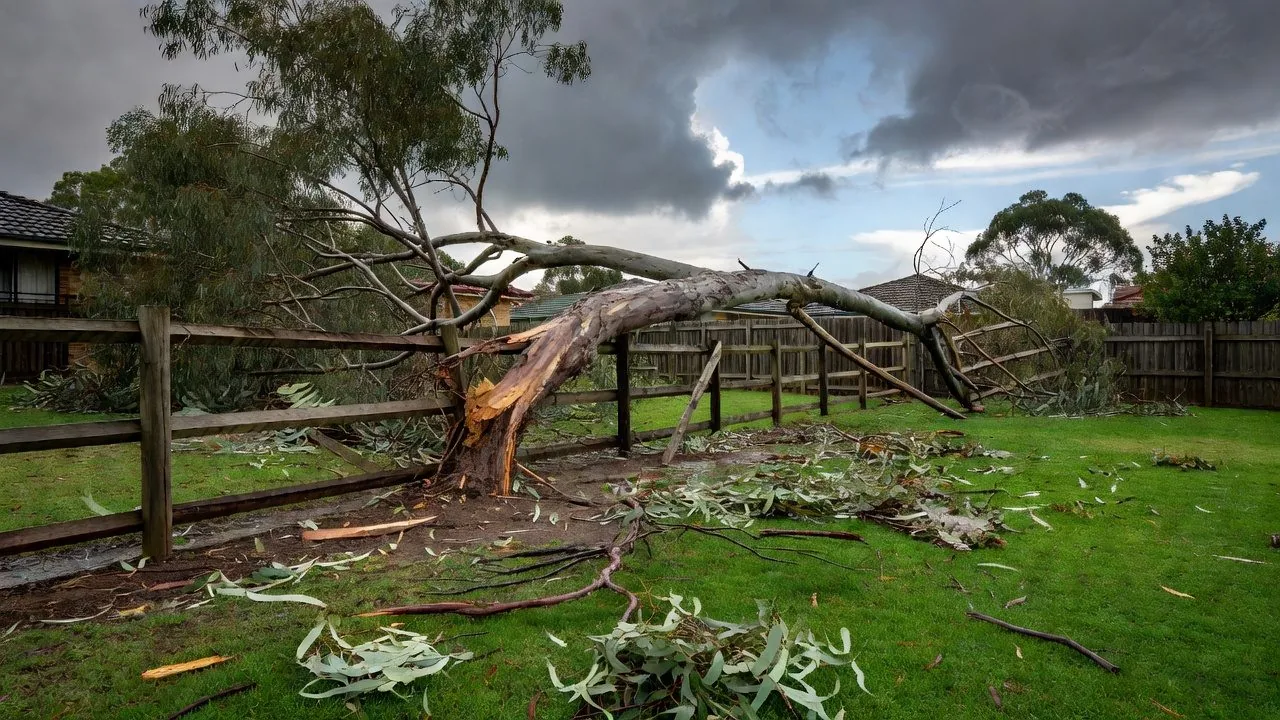
Emergency work is triage. The arborist secures the hazard first — removing the weight that's still loaded, cutting free what's pinning a structure, making the area safe to walk through. Full clean-up often happens the following day in daylight, because night-time chainsaw work around a damaged roof carries risk that daylight removes.
Expect a premium for after-hours and hazardous conditions. Storm-loaded timber under tension is genuinely dangerous work and it's priced accordingly.
Wagga gets real storms
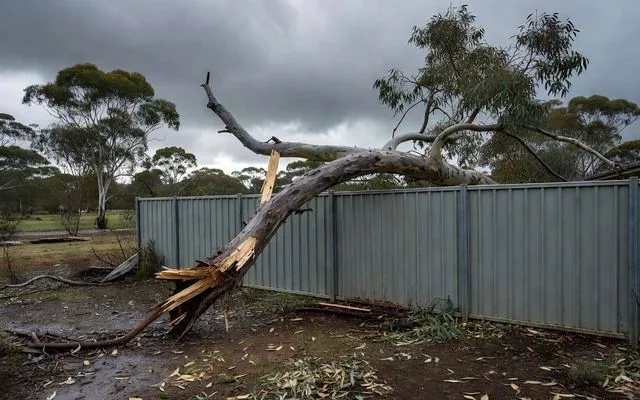
This isn't hypothetical here. On 15 January 2025 a supercell hit Wagga just after 2pm with hail and winds over 100km/h — NSW SES took more than 180 calls for help, mostly trees down across roads and in backyards. On 26 October 2025, SES volunteers and Fire and Rescue NSW worked into the night clearing fallen trees. In December 2024, The Rock and Yenda saw uprooted trees and widespread outages.
After an event like that every arborist in town is booked solid. The people who get seen first are the ones who made contact early and had photos ready.
Insurance
Most home policies cover removing a tree that has hit an insured structure, and many won't cover removing a fallen tree that damaged nothing. Check before authorising a large clean-up. If you need documentation for a claim, ask for an arborist report — insurers frequently want written confirmation of what failed and why.
Areas covered
Wagga Wagga and the surrounding Riverina.