Wagga Tree Services connects Wagga Wagga and the Riverina property owners with qualified, insured local arborists for land clearing and related tree work. Tell us what the tree is doing and we'll match it to an operator who covers your suburb — free call, no obligation.
What clearing usually covers
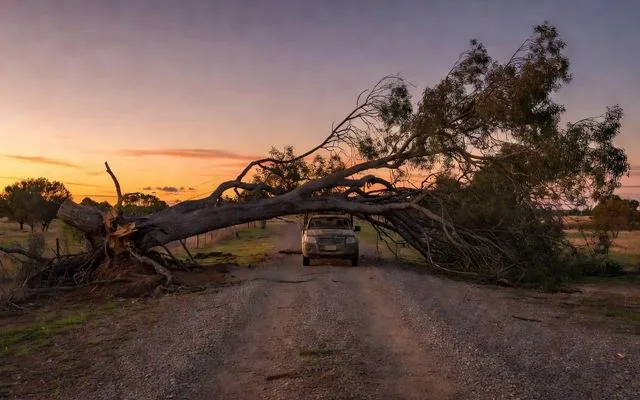
Building blocks being prepared for construction, rural regrowth and woody weeds taking over paddocks, fenceline and laneway clearing, fire-hazard reduction around structures, and scrub or overgrown vegetation on neglected properties.
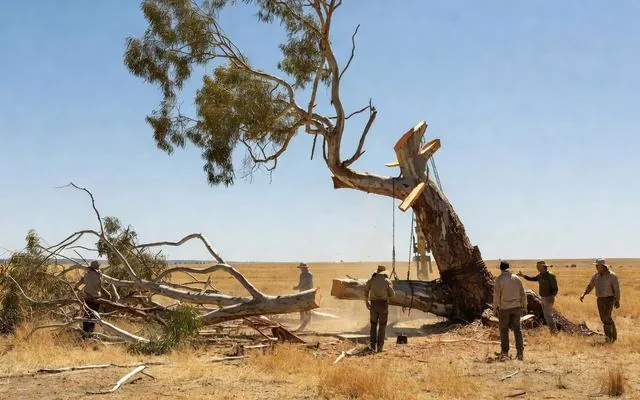
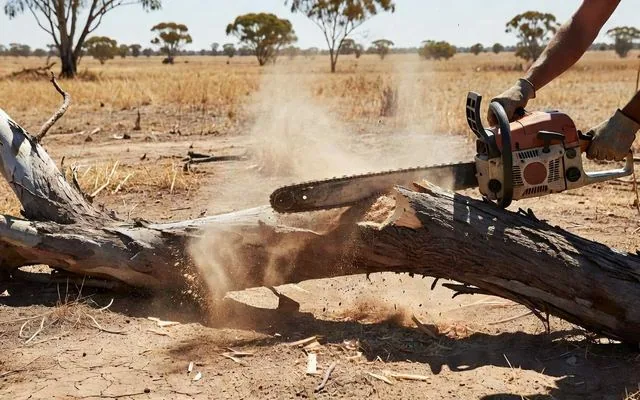
Scale varies enormously — from a quarter-acre suburban block to paddock work measured in hectares — and so does the equipment, from a chipper and chainsaws through to mulchers and excavators.
The rules are the hard part
Native vegetation clearing in NSW is regulated well beyond council tree rules. The Local Land Services Act 2013 governs clearing on rural land, and the Biodiversity Conservation Act 2016 protects threatened species and ecological communities. Wagga Wagga City Council separately requires approval for clearing living trees 8 metres or taller, wetland vegetation, and anything on the Register of Significant or Heritage Trees.
Clearing without the right approvals can breach state legislation with substantial penalties. This is one to check properly before anything starts — with council for urban land, and with Local Land Services for rural.
Fire hazard reduction
Rules around clearing for bushfire protection differ from general clearing, and there are specific allowances for work within set distances of a dwelling. If fire risk is your reason for clearing, say so — the applicable pathway may be different and simpler.
Getting a sensible quote
Clearing is quoted on area, vegetation density, terrain and what happens to the material. Mulching on site is cheaper than carting away. Access for machinery is the usual constraint. Anyone quoting a rural clearing job without walking it first is guessing.