Wagga Tree Services connects Wagga Wagga and the Riverina property owners with qualified, insured local arborists for tree lopping and related tree work. Tell us what the tree is doing and we'll match it to an operator who covers your suburb — free call, no obligation.
What lopping means, and what it costs a tree
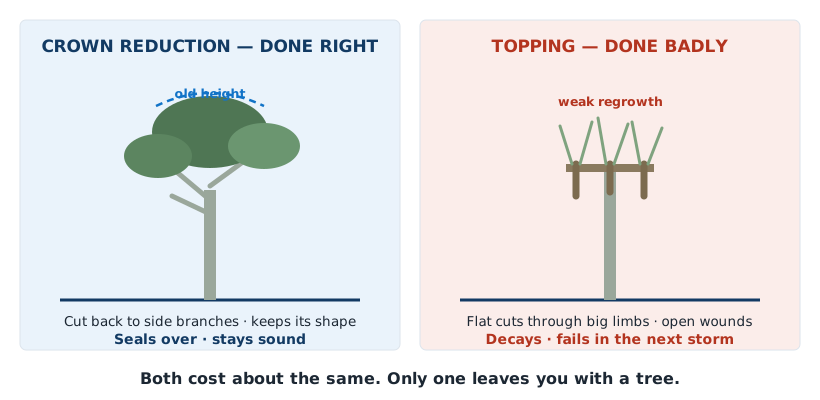
Lopping generally means removing large sections of canopy, often by cutting through significant limbs. Done indiscriminately — 'topping' a tree by cutting the crown flat — it triggers a flush of fast, weakly attached regrowth. That regrowth looks healthy for a couple of seasons and then starts failing in exactly the weather you were worried about in the first place.
It also opens large wounds the tree may not compartmentalise, which invites decay into the trunk. A tree that's been topped often ends up needing full removal years earlier than it otherwise would.
When cutting back is genuinely the right answer
There are plenty of legitimate reasons to reduce a canopy: clearing a roofline or gutter, getting branches off a powerline or driveway, reducing sail area on a tree that's already showing lean, restoring light to a yard, or bringing a tree back into scale on a small block.
The difference is technique. A proper crown reduction cuts back to appropriate lateral branches so the tree keeps a natural shape and can seal its wounds. It costs about the same as bad lopping and the tree survives it.
Lopping versus pruning versus removal
If you want clearance and shape, that's pruning or a crown reduction. If the tree is structurally unsound, no amount of cutting back fixes it and removal is the honest answer. If the tree is simply too big for the block and you'll be cutting it back every two years forever, removal and replanting with a suitable species is usually cheaper over a decade.
Ask the arborist which of the three they'd do on their own property. The answer is usually instructive.
What it costs
Lopping and pruning work generally runs $200 to $1,200 depending on canopy size, height, access and how much material comes out. Green waste volume matters — a heavy reduction on a mature tree can fill several chipper loads, and that's disposal cost as well as labour.
Areas covered
Wagga Wagga and the surrounding Riverina.