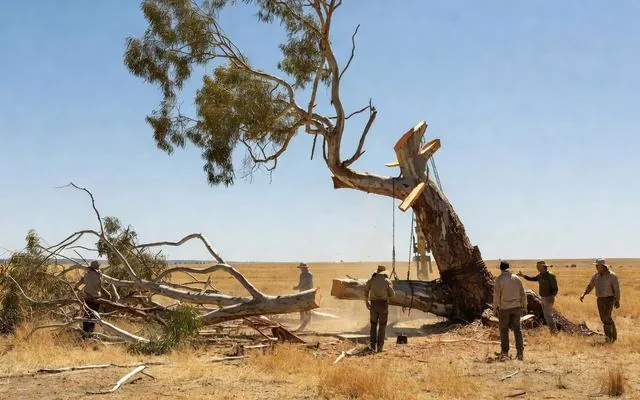
Wagga Tree Services connects Wagga Wagga and the Riverina property owners with qualified, insured local arborists for council permits and related tree work. Tell us what the tree is doing and we'll match it to an operator who covers your suburb — free call, no obligation.
When a permit IS required
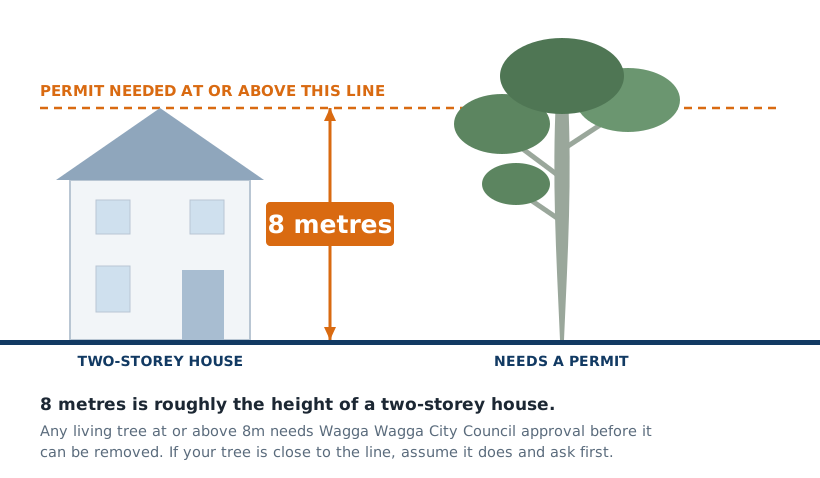
Part 5 of the Wagga Wagga Development Control Plan 2010 sets the rules. A permit is required to clear any living tree with a height equal to or exceeding 8 metres, any native vegetation occurring in a wetland, and any tree, irrespective of size, listed in a register of Significant or Heritage trees.
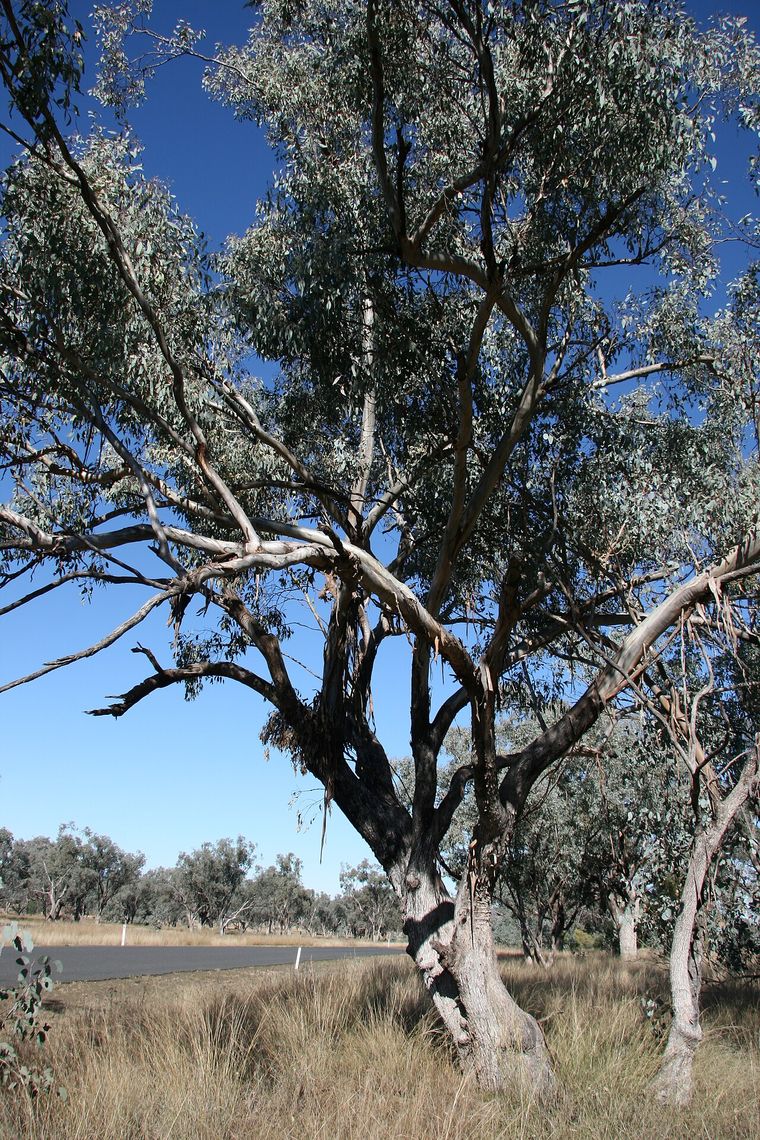
That last one catches people out. The species of conservation significance include River Red Gum (Eucalyptus camaldulensis), White Box, Bulloak and Silver Banksia among many others — so a modest River Red Gum can need a permit even though it's nowhere near 8 metres.
Eight metres is roughly a two-storey house. If your tree is close to that line, assume you need a permit and ask.
Dead trees and dead branches are exempt
You do not need council consent to remove a dead tree, and you don't need it to take dead branches out of a living tree's canopy.
The word doing the work there is "dead". A tree that is failing but still alive is a living tree under the rules — and at 8 metres or more it needs a permit like any other. That distinction is where people come unstuck: deciding a stressed tree was dead enough is not a defence once it's on the ground. If it's marginal, get it assessed first.
What else is exempt
No permit is needed where the tree is a declared noxious plant, where it's a fruit tree or grown for fruit or fodder production, where clearing is already authorised under other legislation or consent was obtained under the Local Land Services Amendment Act 2013, or where you're making safe a tree council is satisfied poses a risk to human life or property.
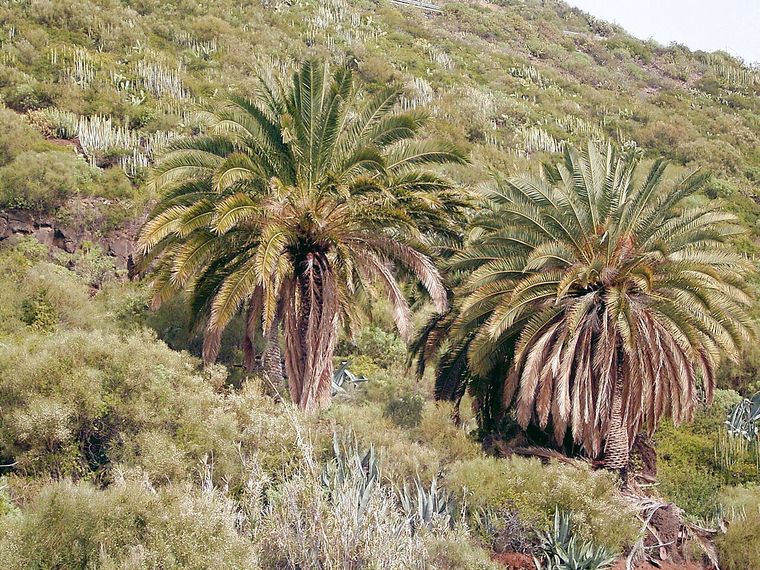
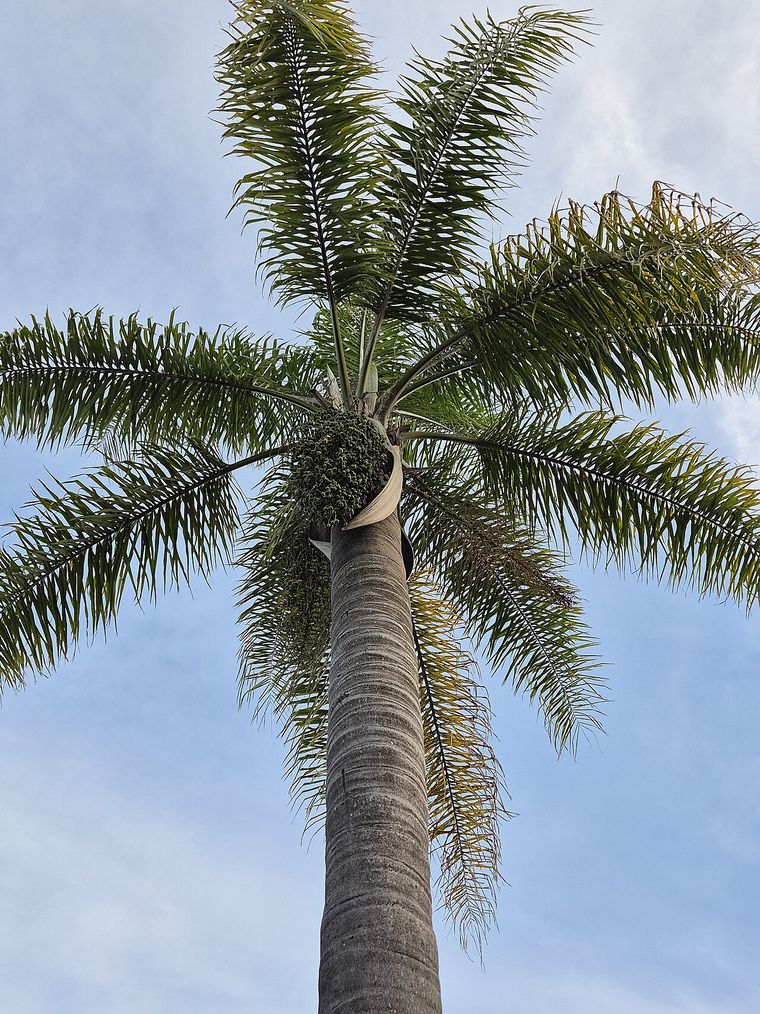
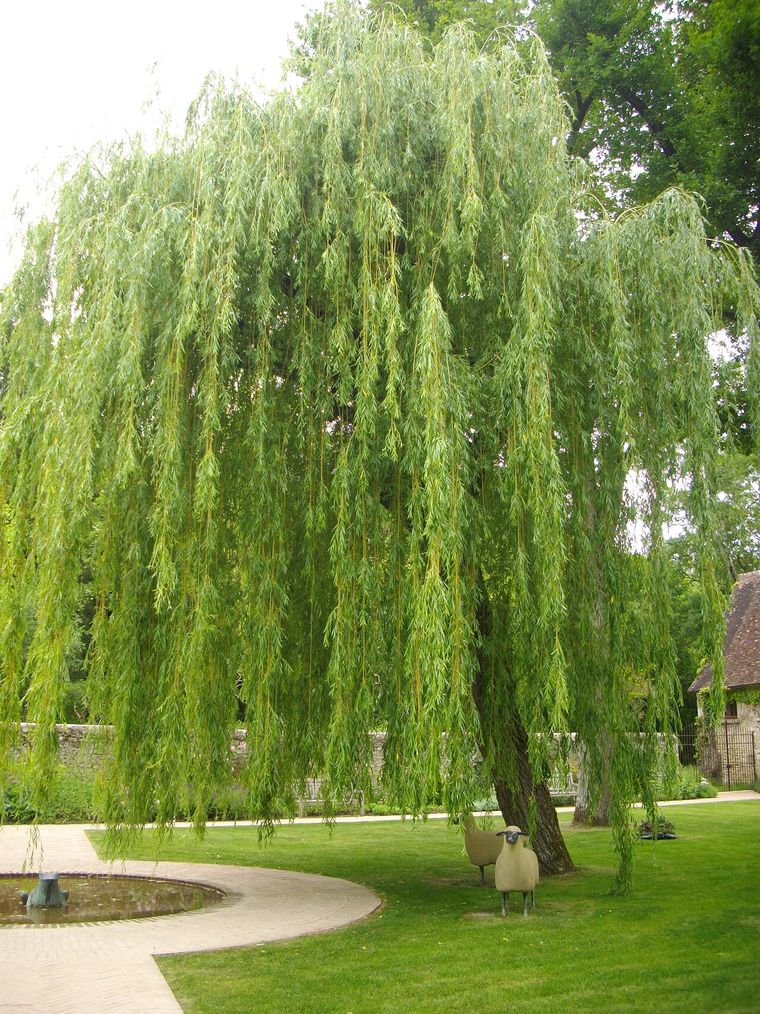
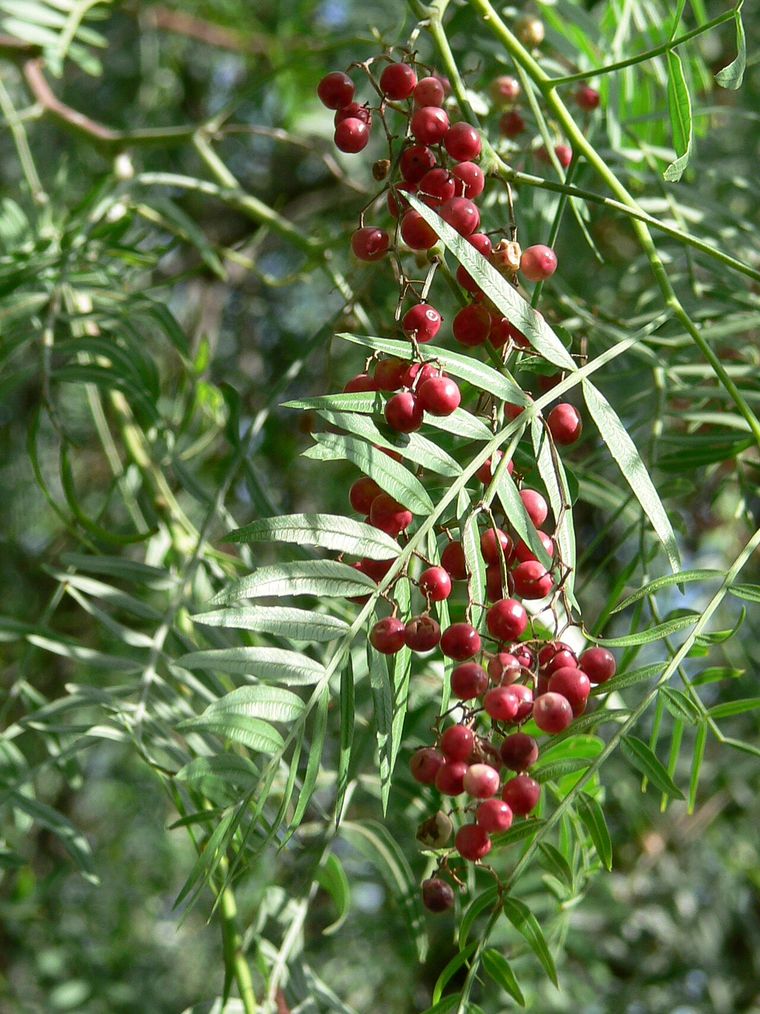
There is also council's Undesirable Plant Species list. Trees on it can go without a permit whatever their size — and several are extremely common on Wagga blocks: Canary Island Date Palm, Cocos Palm, Desert Fan Palm, willows, radiata pine, camphor laurel, peppercorn tree, broad-leaf and small-leaf privet, hawthorn, Cootamundra wattle, desert ash, white cedar, oleander, African olive, athel pine, false acacia, tree of heaven, prickly acacia, cotoneaster and flowering cherry plum.
If your problem tree is a palm, a willow or a privet, there's a good chance you can simply get on with it.
How to apply
First, prepare a site plan showing all vegetation on the property, marking what you propose to clear. Then lodge council's Permit to Clear Vegetation (Trees) form — available online or as a PDF — with photographs and any supporting documents. An arborist report or structural engineer's report may be required.
Council's arborist then inspects the site and assesses the vegetation. A decision is made within 28 days of lodgement and you're notified in writing.
In assessing it, council weighs the tree's health and structural condition, how suited it is to the location, its contribution to the landscape, the cumulative impact of past clearing on the site, whether it's causing structural damage and whether alternatives to removal were explored, its habitat and cultural value, and whether compensatory planting is proposed.
If you're granted a permit to prune
Pruning work under a council permit must be carried out by a minimum AQF Level 2 arborist in accordance with AS 4373-2007, and the property owner must keep the completed permit form for one year.
Worth knowing before you choose who does the work.
Check it properly before you cut
Removing or damaging a protected tree without consent can breach the NSW Environmental Planning and Assessment Act 1979 or the Protection of the Environment Operations Act 1997, and penalties or prosecution can follow. That's state legislation, not just council policy.
This page summarises council's rules in plain English, but council is the authority and the rules turn on your individual tree and property. Read it directly here: Removing private trees — Wagga Wagga City Council.
Areas covered
Wagga Wagga and the surrounding Riverina.