Wagga Tree Services connects Wagga Wagga and the Riverina property owners with qualified, insured local arborists for storm damage and related tree work. Tell us what the tree is doing and we'll match it to an operator who covers your suburb — free call, no obligation.
Wagga's recent storm record
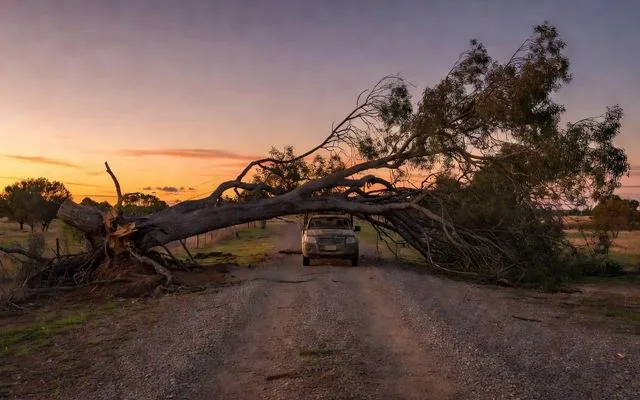
The Riverina gets genuine severe weather and the tree damage is well documented. The 15 January 2025 supercell brought heavy rain, hail and winds exceeding 100km/h to Wagga just after 2pm; NSW SES fielded more than 180 calls, predominantly trees down across roads and in backyards along with fallen power lines and fence damage.
On 26 October 2025 another system had SES volunteers working alongside Fire and Rescue NSW into the night, removing fallen trees and making properties safe. In December 2024 The Rock and Yenda were hit with uprooted trees and widespread power outages.
If you've owned a Wagga property for a few years, you've seen at least one of these.
Hangers are the real hazard
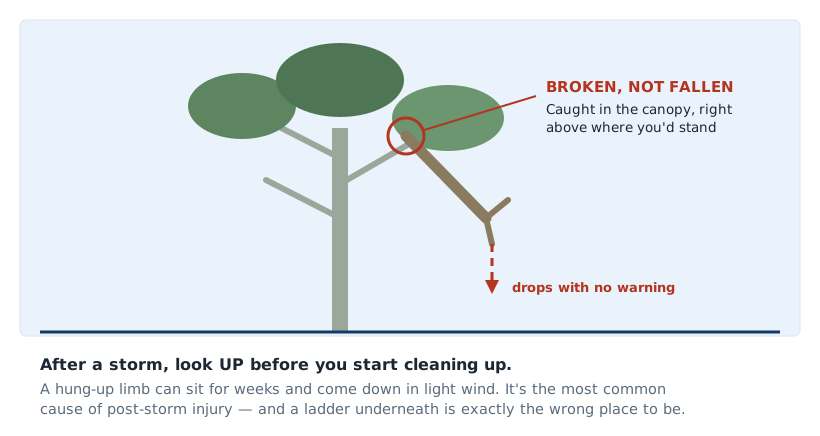
A 'hanger' or 'widow-maker' is a broken limb caught up in the canopy rather than on the ground. It can sit there for weeks and come down with no warning in light wind. They're the most common cause of post-storm injury and they're not a ladder job — getting under one to cut it free is exactly the wrong place to be.
After any significant blow, walk the yard and look up. Broken limbs lodged in the canopy, split unions, fresh lean, or lifted soil on one side of the base all warrant an assessment.
What clean-up covers
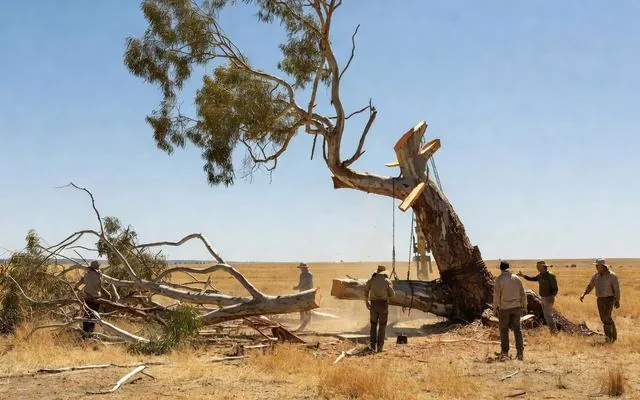
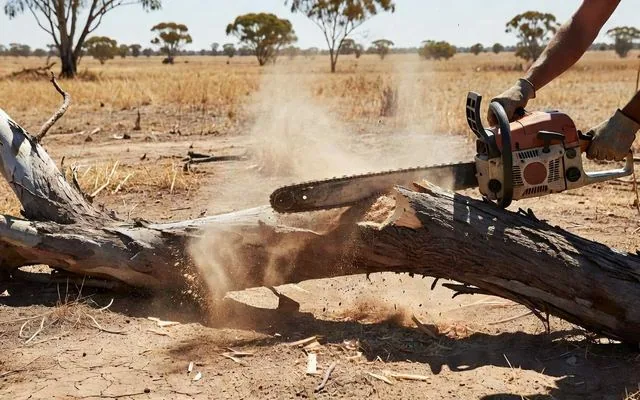
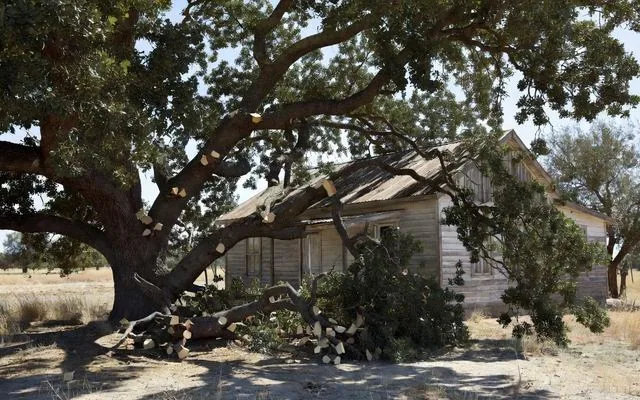
Cutting up and removing fallen timber, retrieving hung-up limbs, making safe split trunks and damaged unions, clearing debris from roofs, gutters, fences and driveways, and chipping green waste on site where there's room.
Where a tree is damaged but salvageable, remedial pruning to rebalance the canopy is often cheaper than removal and gives the tree a chance.
Getting seen quickly
Every arborist in Wagga is flat out for days after a major storm. Photos and a clear description of what's damaged let jobs be triaged properly — genuine hazards first, cosmetic clean-up after. Send them when you first make contact rather than waiting to be asked.
Areas covered
Wagga Wagga and the surrounding Riverina.