Wagga Tree Services does tree removal, lopping, stump grinding and storm response across Wagga Wagga and the surrounding district. Dead gum over the shed, or a limb down after a storm? Tell us what's happening, and we give you a fixed quote once we have looked at the tree.
No obligation. Takes 30 seconds.
Local tree work, priced in the open.
We work in Wagga and the surrounding Riverina. Your enquiry stays with us; it does not go to a list of companies.
We look at the tree, the access and the drop zone, then give you a fixed price in writing. If council approval is needed, you find out then, not after the fact.
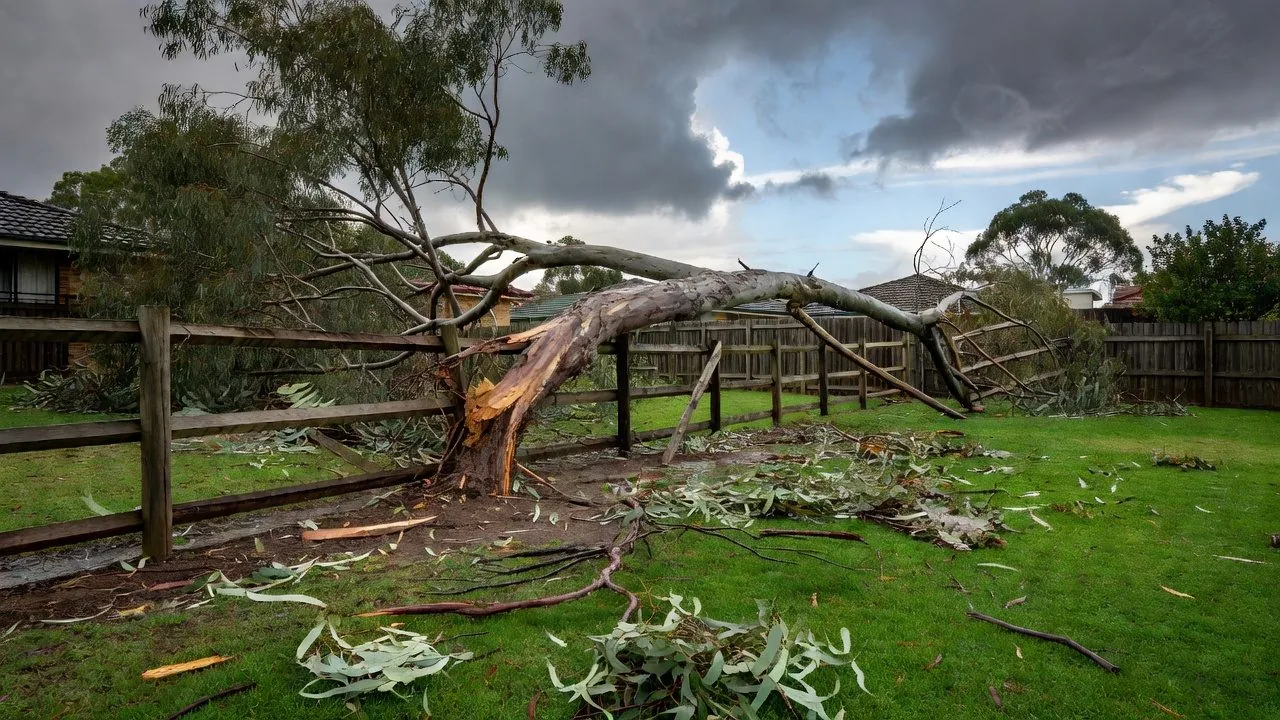
Wagga gets genuine severe weather. When a limb comes down at 9pm the job is triage first: make it safe, then deal with the clean-up in daylight.
We publish indicative ranges rather than hiding behind 'contact us'. You'll still get a fixed quote on site, but you shouldn't have to ring around to learn what a job costs.
In Wagga, a living tree 8 metres or taller needs council approval before it can be touched, and some species need it at any size. The permit page sets out when that applies.
Tell us what you need once. The same crew quotes the job, does it on time and clears up after, so you are not repeating yourself to anyone.
Everything from a single overhanging limb through to full block clearing. Pick what's closest to your situation — or just tell us what's happening and we'll work it out.

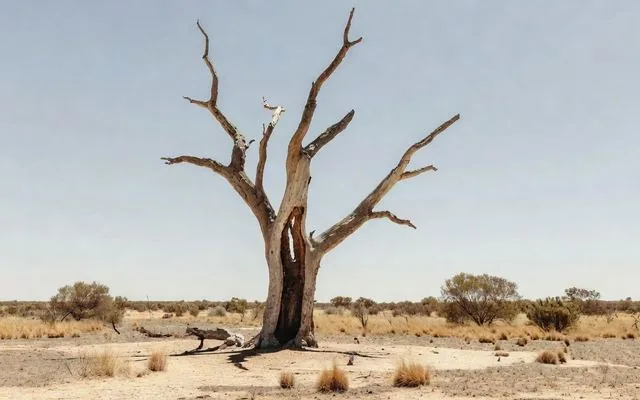
Full removal of trees that are dead, dangerous, outgrowing the block or in the way of building work.
Read more →
Cutting back overgrown canopies for clearance, light and safety — done properly, not just topped.
Read more →
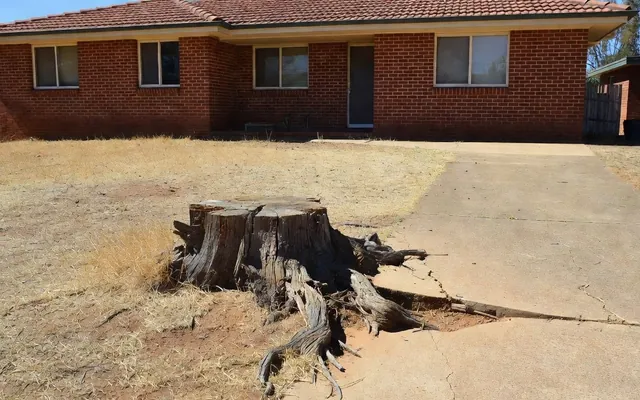
Grinding stumps below ground level so you can turf, plant, pave or build over them.
Read more →
Selective pruning for clearance, health and structure — the maintenance that prevents removals.
Read more →
Post-storm clean-up: fallen limbs, split trunks, hung-up branches and yards full of debris.
Read more →
Trees over houses, powerlines and neighbouring property — the jobs that need proper rigging.
Read more →
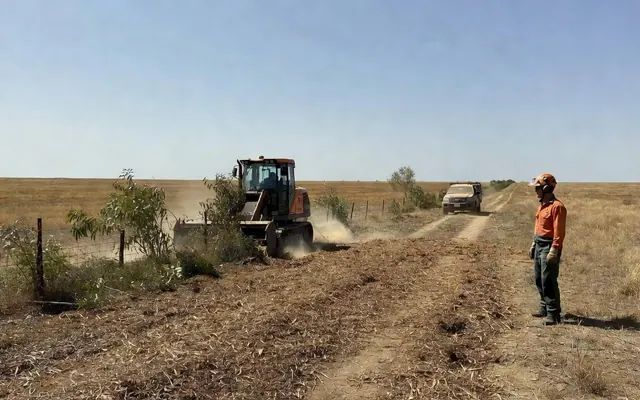
Block clearing, regrowth and scrub removal for rural properties and new builds.
Read more →
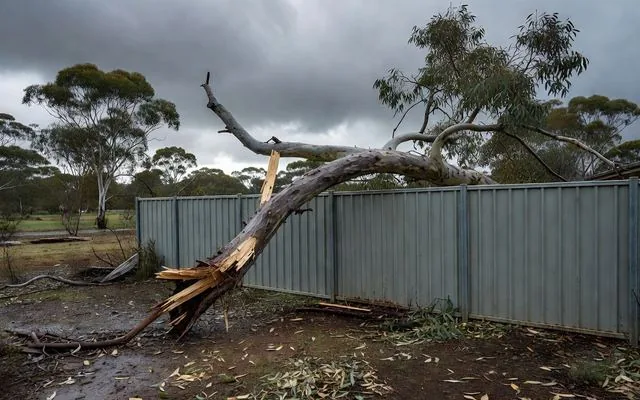
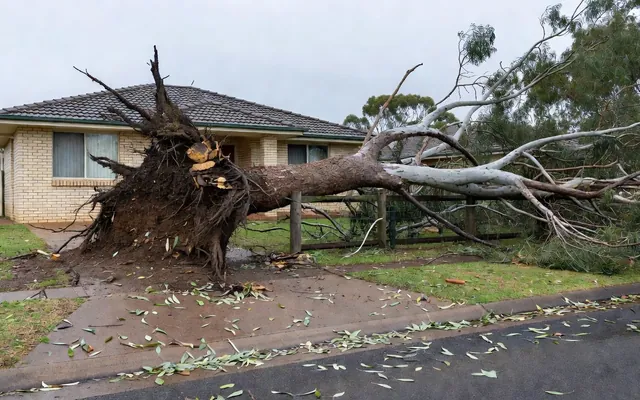
Trees down on roofs, driveways and fences — urgent make-safe and removal, including after hours.
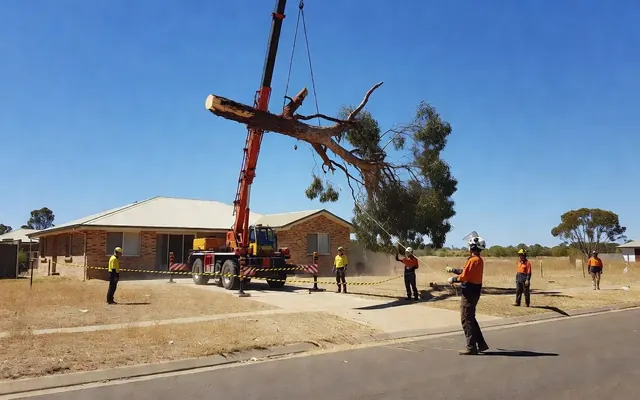
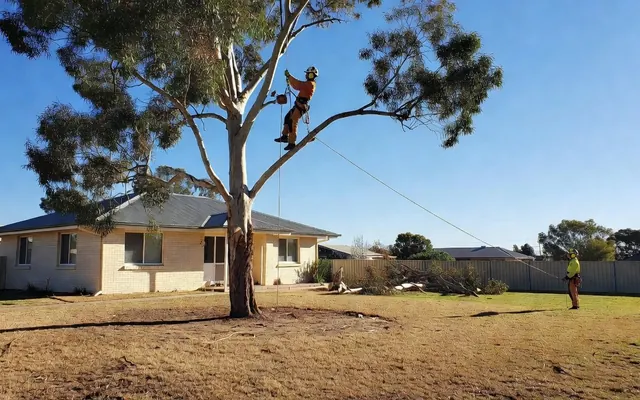
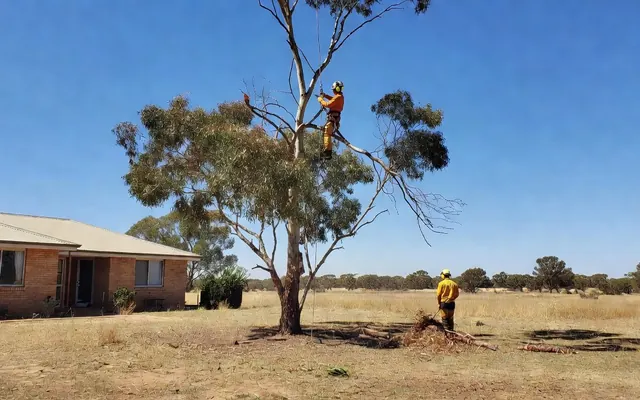
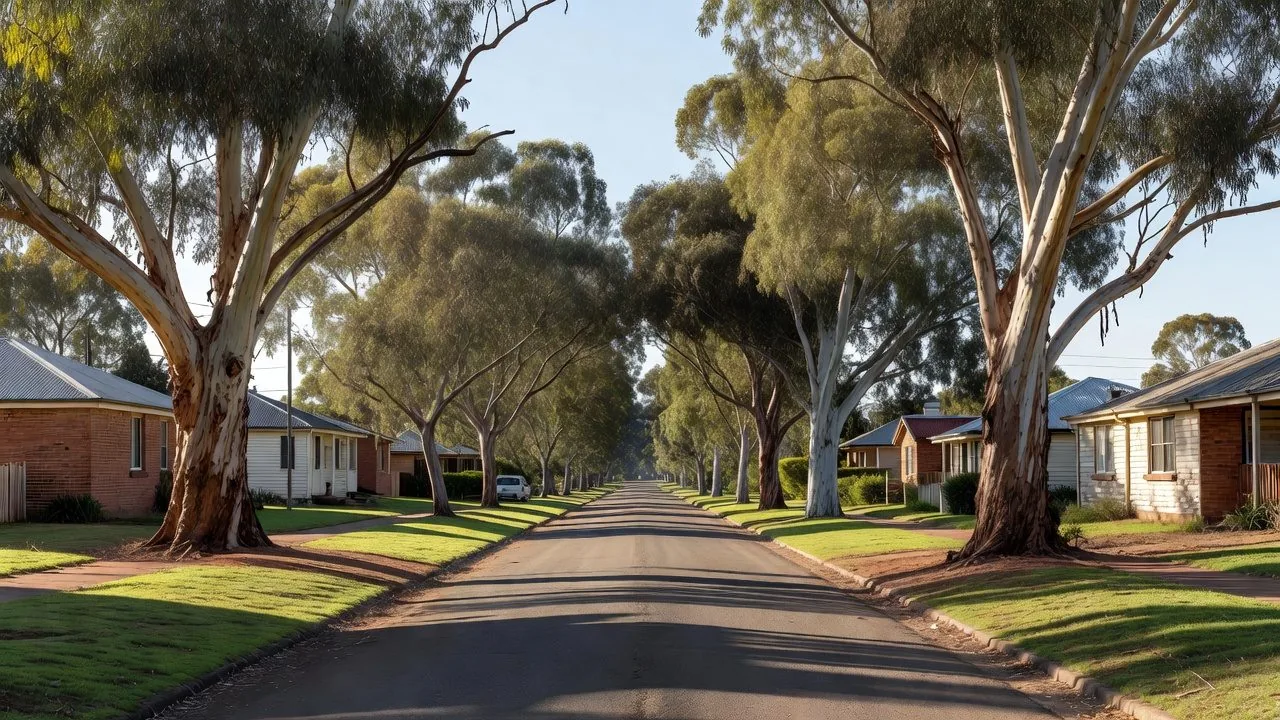
Read more →The card images are illustrations of each problem. They are not photographs of a job.
Tree work in Australia is governed by AS 4373 Pruning of amenity trees. It is the difference between a tree that recovers and one that slowly declines.
AS 4373 is built on CODIT — compartmentalisation of decay in trees. A tree cannot heal a wound the way skin does; it walls the damage off behind chemical and physical barriers and grows around it.
That is why the position of a cut matters more than its neatness. Cut just outside the branch collar and the tree can seal it. Cut flush to the trunk, or leave a stub, and it cannot — the wound stays open to fungal decay for years.
Lopping is the everyday word, and this site uses it because it is the word people search. Worth knowing what it means technically: lopping shortens limbs without regard to where the tree can seal, leaving stubs.
The regrowth that follows is weakly attached — it sprouts from the surface rather than from proper structure — so a heavily lopped tree often becomes more hazardous a few years later, not less. Before a large gum is cut back hard, we tell you what it will look like in five years.
A practising arborist holds AQF Level 3 — Certificate III in Arboriculture. That covers climbing, pruning and removal. AS 4373 expects a Level 3 arborist to assess a tree before it is pruned.
A Level 5 (Diploma) is the consulting qualification, and it is a different job: formal reports, risk assessment, advice for planning matters. A Level 3 arborist cannot write the report a council or an insurer will accept. If you have been asked for an arborist report, that distinction is the whole question.
Before any root pruning, AS 4373 calls for advice from an arborist of at least AQF Level 4. Not because roots are precious, but because cutting them can affect whether the tree stays standing.
The risk is easy to miss: trenching for a driveway, a pool or a service line can go through the root plate, the tree can look fine for two summers, and then come down in a storm. If excavation is planned near a mature tree, that assessment happens first.
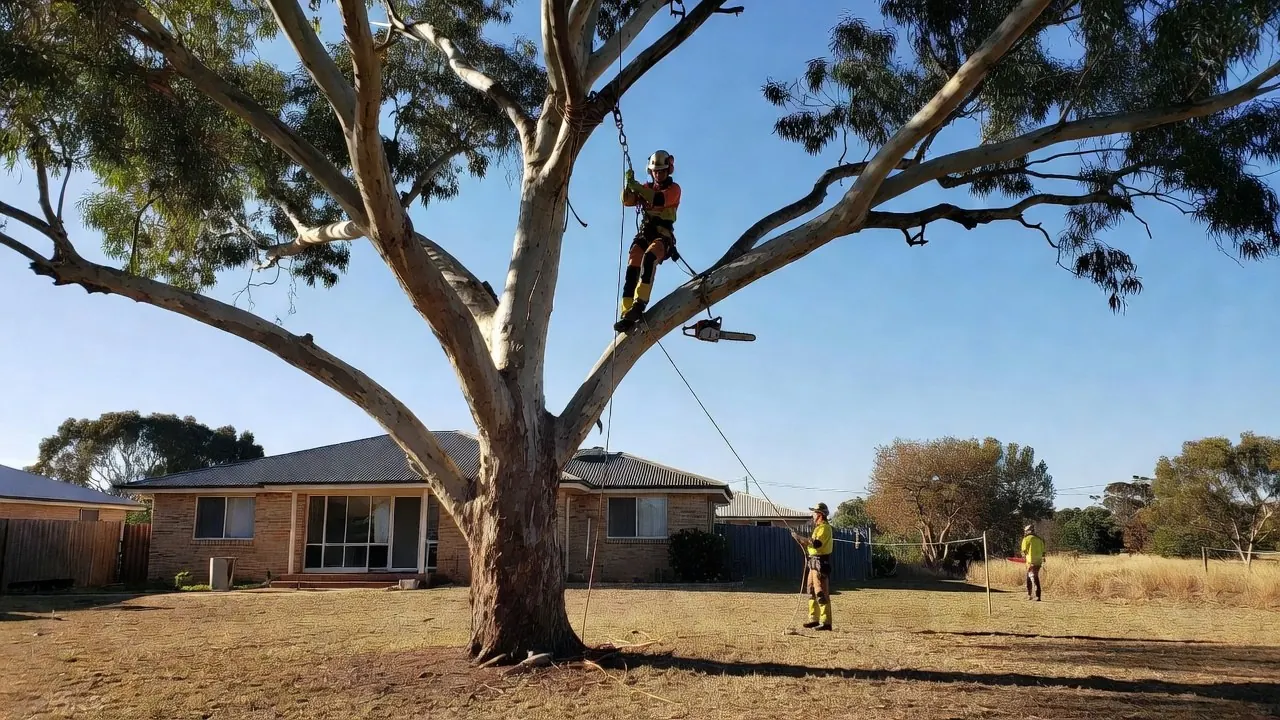
A tree with room to fall gets felled in one piece, and that is quick. In a Wagga backyard with a fence, a shed and a powerline, it is taken down in sections — a climber rigs each piece and lowers it under control.
That is why two removals of the same size can differ so much in price and time. You are paying for access and control, not for the cutting.
This isn't a sales line. The Riverina has a documented record of severe weather taking trees down across the city.
A supercell thunderstorm hit Wagga just after 2pm with heavy rain, hail and winds exceeding 100km/h. NSW SES received more than 180 calls for help — mostly trees down across roads and in backyards, along with fallen power lines and fence damage.
SES volunteers, supported by Fire and Rescue NSW, worked into the night across the region removing fallen trees and making damaged properties safe.
The Rock and Yenda were hit hard — uprooted trees, widespread power outages and roof damage across both townships.

After an event like these, arborists can be booked out for days. Make contact early and have photos ready.
Under Part 5 of the Wagga Wagga Development Control Plan 2010, whether a tree needs council's approval turns on its height, its species and where it grows.
Approval is required for:
Approval is not required for:
Removing or damaging a protected tree without consent can breach the NSW Environmental Planning and Assessment Act 1979 or the Protection of the Environment Operations Act 1997, and penalties or prosecution can follow. Source: Wagga Wagga City Council. The rules turn on your individual tree, so confirm yours.
Full permit rules explainedThe Bureau of Meteorology's long record for Wagga Wagga, read for two questions: when is a large tree most at risk, and when should it be looked at?
| Month | Mean maximum | Mean rain | Days with 25 mm or more | Strongest gust on record |
|---|---|---|---|---|
| January | 31.9 °C | 42.6 mm | 0.5 | 135 km/h |
| February | 31.0 °C | 39.4 mm | 0.3 | 118 km/h |
| June | 13.9 °C | 50.4 mm | 0.2 | 98 km/h |
| July | 12.8 °C | 53.0 mm | 0.1 | 104 km/h |
| October | 21.8 °C | 56.2 mm | 0.4 | 109 km/h |
| November | 26.0 °C | 49.3 mm | 0.3 | 139 km/h |
| December | 29.6 °C | 46.2 mm | 0.4 | 106 km/h |
| Whole year | 22.3 °C | 571.6 mm | 3.6 | 139 km/h |
Source: Bureau of Meteorology, Wagga Wagga AMO, station 072150, records from 1942 (sunshine 1986–2016, 9am humidity to 2010). Read 14 October 2026. Every figure is the Bureau's, not our estimate.
The worst wind comes in the warm months. The two strongest gusts in the station's record were in November (139 km/h) and January (135 km/h). The three storms listed above fell in October, December and January. Our reading: in Wagga the damaging wind comes with warm-season thunderstorms, so the time to have a large limb over the house or the fence looked at is winter or early spring, before November.
Rain is even through the year; drying is not. Every month averages between 39 and 57 mm. But a January day averages 31.9 °C, 52% humidity at 9am and 10.8 hours of sun, and a July day 12.8 °C, 88% and 4.8 hours. A tree gets the same rain in both seasons and loses far more of it in summer. Late summer is when a stressed tree shows it, with a thinning crown or dead wood, and it is worth a look then.
Frost decides timing, not damage. Wagga averages 21.6 nights a year at or below 0 °C, most of them from June to August. Deciduous trees are bare then, so their structure is easiest to see, and winter is a sensible time to have one assessed.
Access decides the price more than height does. Indicative ranges by tree size, and what moves them, are on the price guide.
The honest answer is that the tree is rarely the slow part — access, cleanup and what you want done with the debris are.
| Small tree, open access | 1–3 hours | Room to fell in one piece, chip on site. |
| Medium tree, sectional | Half a day | Climbed and rigged down in pieces past a fence or shed. |
| Large gum, tight access | A full day or more | Every piece lowered under control. Often a two or three person crew. |
| Crane-assisted removal | Often hours rather than days | A crane lifts whole sections out instead of lowering them piece by piece. Costs more per hour and saves more than it costs on the right job. |
| Stump grinding | 30–90 minutes | Usually a separate visit with a different machine. The quote says whether it is included. |
| Storm make-safe | Same day where a crew is available | Making a tree safe and clearing the full job are two different visits after a big wind event. |
We give a duration after we have walked the access. The walk around the block is what decides the number.
Across Wagga's suburbs and out through the surrounding Riverina. Travel can affect the quote for properties further out.

Often, yes. Under Part 5 of the Wagga Wagga Development Control Plan 2010, a permit is required for any living tree 8 metres or taller, any native vegetation in a wetland, and any tree of any size on a register of Significant or Heritage trees.
Council consent is not required to remove a dead tree, or to take dead branches out of a living tree's canopy. Also exempt are declared noxious plants, fruit and fodder trees, and anything on council's Undesirable Plant Species list — which includes Canary Island Date Palms, Cocos Palms, Desert Fan Palms, willows, radiata pine, camphor laurel and privet. Other palms are not on the list.
Removing a protected tree without consent can breach state legislation and attract penalties, so check before you cut. Council's own page is the authority: Removing private trees — Wagga Wagga City Council.
On the price guide, a medium tree of 5 to 10 metres is $800 to $2,500. Small ornamentals start around $250. Large trees of 10 to 15 metres run $2,500 to $6,000, and trees over 15 metres run $6,000 to $15,000, with crane work at the top of that band. Size matters less than you'd think — access is usually the bigger cost driver. A modest tree in a tight back corner with no machine access can cost more than a bigger one on an open block.
For genuine emergencies — a tree on a roof, a limb over a driveway, storm damage blocking access — tell us when you make contact and we'll flag it as urgent. If there are powerlines involved, call Essential Energy first and don't approach the tree.
Lopping is the common Australian term for cutting a tree back hard, often removing large sections of the canopy. Pruning is more selective — taking specific branches for clearance, health or shape. Heavy lopping can leave a tree weaker and prone to regrowth that fails later, so we tell you when pruning is the better option.
Stump grinding is normally quoted separately from removal. If you want the stump gone — to replant, lay turf or pour concrete — say so up front so it's in the same quote rather than becoming a second visit.
We do. We look at the tree, quote it in writing, do the work on the day agreed, and clear the site after.
Our quote says whether all material is taken away and the site left clean. If you want the wood cut to firewood lengths and stacked, or mulch left for the garden, mention it when we quote — it's usually easy to accommodate and can reduce the price.
Yes. We work across the surrounding Riverina — Uranquinty, Ladysmith, The Rock, Collingullie, Junee, Coolamon, Temora, Lockhart and further out. Travel may affect the quote for more distant properties.
Tell us the suburb, the tree and how urgent it is, and we arrange a time to look at it.
Call 0420 115 087